

Layton Utah Irrigation Installation: Professional Irrigation Systems for Healthy, Beautiful Landscapes
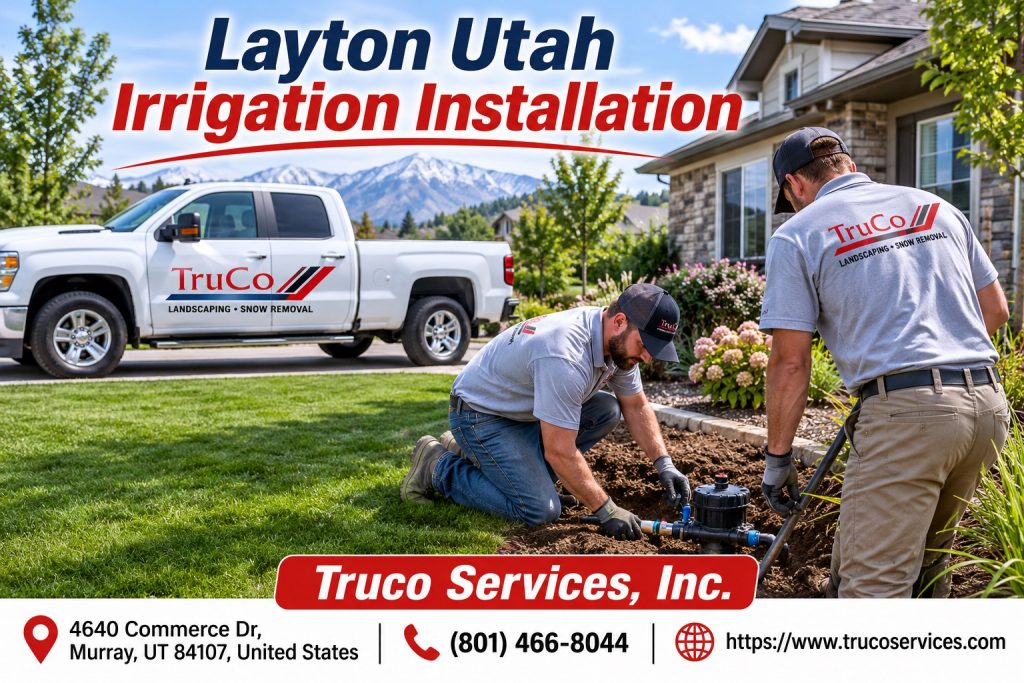
A healthy, attractive landscape requires more than quality plants, well-maintained lawns, and thoughtful landscape design. It also needs a dependable irrigation system that delivers the right amount of water to the right areas at the right time. For homeowners and commercial property owners in Layton, Utah, professional irrigation installation is an important investment in maintaining beautiful outdoor spaces while using water efficiently.
Layton’s climate presents unique landscaping challenges. Hot, dry summers, limited rainfall, seasonal temperature changes, and occasional freezing conditions make proper irrigation planning essential. Without an effective watering system, lawns may develop dry patches, trees and shrubs may become stressed, and flower beds may struggle to thrive. Inconsistent watering can also contribute to unnecessary water consumption and higher utility bills.
Professional Layton Utah Irrigation Installation helps property owners overcome these challenges by providing customized watering solutions designed around their landscape, soil conditions, plant requirements, and property layout.
Whether you are installing a new lawn, developing a backyard landscape, renovating an existing outdoor space, or improving the irrigation system on a commercial property, a professionally designed system can make landscape maintenance easier and more effective.
Truco Services, Inc. provides landscaping services that can help property owners create and maintain attractive outdoor environments. When planning an irrigation installation project, working with an experienced landscaping company can help ensure that your watering system supports the long-term health and appearance of your landscape.
Understanding Professional Irrigation Installation
Irrigation installation involves planning, designing, installing, and configuring a watering system that distributes water throughout a landscape. Instead of depending entirely on manual watering or portable sprinklers, an installed irrigation system provides a more consistent and convenient way to maintain lawns, gardens, trees, shrubs, and landscaped areas.
A properly installed irrigation system considers several important factors:
-
Property size and overall landscape layout.
-
Types of grass, trees, shrubs, and flowers.
-
Soil composition and drainage characteristics.
-
Sun exposure and shaded areas.
-
Slopes, elevation changes, and potential runoff.
-
Water pressure and available water supply.
-
Seasonal watering requirements.
-
Water conservation and irrigation efficiency.
Every property has different watering needs. A small residential lawn may require a relatively simple sprinkler system, while a larger property with multiple garden beds, trees, shrubs, and lawn areas may benefit from several independently controlled irrigation zones.
Professional installation helps ensure that each section receives appropriate coverage without wasting water.
If you need related articles, see the following:
Layton Utah Retaining Wall Installation
Layton Utah Retaining Wall Design
Layton Utah Hardscape Installation
Why Layton, Utah Properties Need Proper Irrigation Systems
Layton is located in Davis County, where landscaping must accommodate a climate characterized by hot summers, cold winters, and relatively limited precipitation. These conditions make dependable irrigation particularly important.
During the summer, temperatures can rise significantly, increasing the amount of moisture lawns and plants lose through evaporation. Without regular watering, grass can become dry, plants may wilt, and newly installed landscaping can struggle to establish healthy roots.
A professionally installed irrigation system helps address these seasonal challenges.
Managing Hot and Dry Summer Conditions
Summer heat increases the watering requirements of many landscape plants. Grass, ornamental plants, shrubs, and trees may require supplemental water to remain healthy.
An automatic irrigation system can distribute water according to the specific requirements of different landscape areas. Properly positioned sprinkler heads help reduce dry spots, while drip irrigation can deliver water directly to plant root zones.
Preparing for Cold Winter Temperatures
Layton winters bring freezing temperatures that can damage irrigation components if they are not properly winterized.
A professionally planned irrigation installation should account for seasonal maintenance. This may include accessible shutoff valves, appropriate drainage arrangements, and a system layout that allows irrigation lines to be properly winterized before freezing weather arrives.
Supporting Different Soil Conditions
Soil composition affects how quickly water is absorbed and how effectively it reaches plant roots.
Clay-heavy soils may absorb water slowly, increasing the risk of runoff. Sandy soils generally drain faster and may require more frequent watering.
Understanding these differences helps determine the appropriate sprinkler configuration, drip system design, and watering schedule.
Types of Irrigation Systems for Layton Properties
Choosing the right irrigation system is one of the most important decisions in a landscaping project. Different areas of a property require different watering methods. A well-designed system may incorporate multiple irrigation technologies to achieve consistent coverage and minimize unnecessary water use.
1. Automatic Sprinkler Systems
Automatic sprinkler systems are among the most popular choices for residential and commercial lawns.
These systems use underground pipes, sprinkler heads, control valves, and an irrigation controller to distribute water across designated lawn areas.
Benefits include:
-
Convenient automatic watering.
-
Consistent water distribution.
-
Reduced need for manual watering.
-
Programmable watering schedules.
-
Coverage for large and small lawn areas.
-
Better control over watering frequency.
Sprinkler systems can be configured with different head types depending on the shape and size of the lawn.
Pop-up spray heads are commonly used for smaller lawn areas, while rotary sprinkler heads are suitable for larger spaces that require broader coverage.
Proper spacing and adjustment are essential. Sprinkler heads should provide appropriate overlapping coverage to prevent dry patches and uneven watering.
2. Drip Irrigation Systems
Drip irrigation is an excellent option for flower beds, garden areas, trees, shrubs, and decorative landscaping.
Rather than spraying water over an entire area, drip irrigation uses tubing and emitters to deliver water directly to the soil near plant roots.
This approach offers several advantages:
-
Reduced water loss from evaporation.
-
Less overspray onto sidewalks and driveways.
-
More targeted watering.
-
Improved moisture control around plants.
-
Reduced unnecessary watering between plants.
-
Greater flexibility for landscaped planting beds.
Drip irrigation is particularly useful for water-conscious landscaping projects in Layton.
It can also be installed around ornamental trees, foundation plantings, perennial gardens, and other areas where conventional sprinklers may be less effective.
Utah State University Extension identifies drip irrigation as an effective option for delivering water directly to plant root zones and reducing unnecessary watering.
3. Smart Irrigation Systems
Smart irrigation technology allows property owners to manage watering schedules more intelligently.
Traditional irrigation controllers operate according to preset schedules. Smart controllers can use weather information, rainfall data, seasonal adjustments, and other environmental information to modify watering schedules.
Depending on the equipment, smart irrigation systems may provide:
-
Weather-based watering adjustments.
-
Seasonal scheduling.
-
Automatic rain delays.
-
Remote access through mobile applications.
-
Improved control over individual irrigation zones.
-
Reduced unnecessary watering.
For Layton homeowners, smart irrigation controllers can be particularly useful because summer watering needs differ significantly from spring and fall requirements.
A smart controller can help prevent the system from continuing to operate at peak summer settings when cooler temperatures reduce landscape water demand.
4. Rotor Sprinkler Systems
Rotor sprinkler heads distribute water through rotating streams. They are frequently used for larger lawn areas where water needs to travel greater distances.
These systems can provide relatively uniform coverage when properly designed and installed.
Rotor sprinklers are useful for:
-
Large residential lawns.
-
Commercial properties.
-
Open landscaped areas.
-
Large front and backyards.
-
Recreational grass areas.
The correct nozzle, operating pressure, spacing, and precipitation rate must be considered during installation.
5. Pop-Up Spray Irrigation Systems
Pop-up sprinklers are installed below ground and rise when the irrigation system activates.
When watering is complete, the heads retract into their housings, helping keep the lawn relatively unobstructed.
They are commonly used in smaller lawn areas and spaces with more complex landscaping shapes.
Proper installation helps prevent sprinkler heads from becoming obstructed by grass, soil, or landscaping materials.
6. Drip and Sprinkler Combination Systems
Many Layton landscapes benefit from combining multiple irrigation methods.
For example, a residential property may have:
-
Pop-up sprinklers for the front lawn.
-
Rotor sprinklers for a large backyard.
-
Drip irrigation for flower beds.
-
Separate drip lines for trees and shrubs.
-
Dedicated irrigation zones for vegetable gardens.
This approach allows each landscape area to receive water according to its specific requirements.
Combining irrigation technologies can also make it easier to maintain attractive landscaping without applying the same watering schedule to every plant.
The Importance of Irrigation Zoning
Irrigation zoning is an essential part of professional irrigation installation.
A zone is an individual section of an irrigation system controlled by a valve. Each zone operates separately, allowing different parts of the property to receive different watering schedules.
For example, a property may have separate zones for front lawn areas, backyard grass, flower beds, trees, and shrubs.
This arrangement is important because different plants have different moisture requirements.
Grass generally needs more frequent irrigation than established trees and shrubs. Flower beds may require drip irrigation, while large lawn areas may need rotor sprinklers.
Grouping plants with similar water requirements into irrigation zones helps prevent overwatering and underwatering.
Utah State University Extension recommends grouping plants according to their water needs, a landscaping practice commonly called hydrozoning.
The Irrigation Installation Process
A successful irrigation installation requires careful preparation, appropriate materials, and attention to the property’s existing landscape.
Although every project is different, a professional installation generally involves several important stages.
Step 1: Property Evaluation
The first step is evaluating the property and determining its irrigation requirements.
This includes examining:
-
Total lawn area.
-
Existing landscaping.
-
Garden and planting bed locations.
-
Trees and shrubs.
-
Property elevation.
-
Soil conditions.
-
Sunlight exposure.
-
Existing water connections.
-
Available water pressure.
A thorough evaluation helps determine the appropriate irrigation design.
Step 2: Irrigation System Design
Once the property has been evaluated, the irrigation layout can be planned.
The design identifies where sprinkler heads, drip lines, valves, controllers, and main water connections should be located.
A good design also considers future landscaping needs.
For example, homeowners who plan to add a patio, retaining wall, outdoor kitchen, or additional garden beds should account for those improvements before irrigation lines are installed.
Planning ahead helps reduce the likelihood of expensive modifications later.
Step 3: Selecting Irrigation Equipment
The next step involves selecting appropriate irrigation components.
These may include:
-
PVC or polyethylene irrigation pipes.
-
Sprinkler heads and nozzles.
-
Drip tubing and emitters.
-
Irrigation control valves.
-
Valve boxes.
-
Automatic controllers.
-
Rain or soil moisture sensors.
-
Pressure regulators.
-
Filters.
-
Backflow prevention equipment.
The equipment must be compatible with the property’s water supply and operating pressure.
Step 4: Preparing the Property
Before installing underground irrigation lines, the property must be prepared.
This may involve marking utility locations, identifying existing underground structures, determining trench locations, and protecting existing landscaping.
Careful preparation helps reduce the risk of damaging utility lines, foundations, driveways, and other structures.
Step 5: Installing Irrigation Lines
Underground pipes and irrigation lines are installed according to the approved layout.
The installation must account for proper pipe sizing, connections, depth, and positioning.
Sprinkler heads should be positioned to provide appropriate coverage without unnecessarily watering buildings, sidewalks, driveways, and other hard surfaces.
Drip irrigation tubing is installed throughout designated planting areas.
Step 6: Installing Valves and Controllers
Control valves regulate the flow of water to individual irrigation zones.
The irrigation controller manages when each zone operates and how long it runs.
For larger landscapes, separate zones provide greater flexibility and make it easier to manage different plant requirements.
Step 7: Testing the Irrigation System
Before completing the project, the system should be tested.
Testing generally involves checking:
-
Water pressure.
-
Pipe connections.
-
Valve operation.
-
Sprinkler head positioning.
-
Drip emitter performance.
-
Irrigation coverage.
-
Controller programming.
-
Potential leaks.
-
Drainage and runoff.
Any problems identified during testing should be corrected before the system is placed into regular operation.
Step 8: Programming and Owner Instructions
The final stage involves programming the irrigation controller and explaining how the system operates.
Property owners should understand how to change watering schedules, adjust seasonal settings, operate individual zones, and shut down the system when necessary.
They should also know how to prepare the system for winter.
Water Conservation and Efficient Irrigation in Layton
Water conservation is an important consideration for landscaping throughout Utah.
According to Utah State University Extension, urban landscape irrigation accounts for approximately 50% to 65% of annual municipal water use in Utah. A significant portion is applied beyond what plants actually need.
A professionally planned irrigation system can help reduce unnecessary water use through proper design and operation.
Water Plants According to Their Needs
Different plants require different amounts of water.
A lawn should not automatically receive the same watering schedule as a group of established trees or drought-tolerant shrubs.
Hydrozoning helps ensure that plants receive appropriate amounts of water.
Avoid Overspray
Sprinkler heads should be positioned and adjusted to direct water toward the intended landscape areas.
Overspray onto sidewalks, driveways, patios, and buildings wastes water and can create unwanted moisture problems.
Use Appropriate Watering Schedules
Watering schedules should change as temperatures and weather conditions change.
During cooler seasons, landscapes generally require less supplemental irrigation than during hot summer weather.
Consider Drip Irrigation
Drip systems are especially useful for landscaped areas because they deliver water close to plant roots.
They can help reduce evaporation and unnecessary watering between plants.
Install Pressure Regulation
Excessive pressure can create misting, uneven sprinkler distribution, and unnecessary water loss.
Pressure regulators help irrigation equipment operate within appropriate pressure ranges.
Consider Smart Controllers
Weather-based irrigation controllers can help adjust watering schedules when weather conditions change.
These devices can be particularly useful for homeowners who want to reduce manual adjustments throughout the growing season.
Layton Utah Irrigation Installation and Local Requirements
Before installing a new irrigation system, property owners should understand local requirements.
Layton City provides guidance for new outdoor sprinkler installations, including obtaining instructions from the Building Department, verifying water pressure with the water supplier, and arranging the required inspection.
The city’s published guidance also identifies a landscape sprinkler system permit requirement and emphasizes backflow prevention to protect the drinking water supply. Property owners should contact the city to verify current permit fees and requirements before beginning work.
Important considerations include:
Permits: Check with the Layton City Building Department before installing a new outdoor sprinkler system.
Water pressure: Verify available pressure with the appropriate water supplier before selecting equipment.
Backflow prevention: Proper backflow protection is important when connecting irrigation equipment to culinary water.
Inspections: Confirm applicable inspection requirements with Layton City Public Works.
Watering restrictions: Follow current local watering schedules and seasonal restrictions.
Layton City publishes outdoor watering guidance and seasonal irrigation information. Its published 2026 notice, for example, announced a September 15 shutdown of the city’s secondary water system and restrictions on outdoor irrigation after that date. Always verify the current year’s schedule before operating an irrigation system.
Residential Irrigation Installation in Layton, Utah
A properly installed irrigation system can make residential landscape maintenance significantly easier.
Homeowners invest time and money in lawns, flower beds, trees, shrubs, and outdoor living spaces. Without adequate irrigation, these investments can become difficult to maintain.
Residential irrigation installation can accommodate properties of different sizes and landscaping styles.
Front Yard Irrigation
The front yard contributes significantly to a home’s curb appeal.
A well-maintained lawn, healthy shrubs, colorful flowers, and attractive trees create a welcoming appearance.
An appropriately designed sprinkler system can provide consistent watering while reducing the need for manual watering.
Backyard Irrigation
Backyards often contain several different landscape features.
These may include lawns, garden beds, shade trees, decorative plants, and outdoor entertainment spaces.
A combination of sprinkler and drip irrigation can help maintain these areas efficiently.
Garden and Flower Bed Irrigation
Gardens and flower beds require careful watering to maintain healthy roots and attractive flowers.
Drip irrigation is often a practical solution because it supplies water directly to the soil.
It can also help avoid unnecessary water spraying onto walkways, outdoor furniture, and decorative landscape features.
Tree and Shrub Irrigation
Trees and shrubs have different watering requirements from turfgrass.
Established trees generally benefit from deeper, less frequent watering, while newly planted trees and shrubs may require more frequent attention while their roots become established.
Proper irrigation placement helps ensure that water reaches the root zone instead of simply wetting the surrounding surface.
Commercial Irrigation Installation in Layton
Commercial properties also benefit from professionally planned irrigation systems.
Businesses, office buildings, retail centers, apartment communities, and other commercial developments often contain substantial landscaped areas that require consistent maintenance.
An effective commercial irrigation system can help maintain an attractive property while reducing the labor associated with manual watering.
Commercial irrigation installation may include:
-
Large-scale sprinkler systems.
-
Multiple irrigation zones.
-
Drip irrigation for landscaped beds.
-
Automatic irrigation controllers.
-
Water-efficient sprinkler heads.
-
Separate watering schedules.
-
Irrigation solutions for trees and shrubs.
-
Systems designed around commercial landscape layouts.
A healthy commercial landscape creates a positive impression for customers, tenants, visitors, and employees.
Reliable irrigation is an important part of protecting that investment.
Common Irrigation Installation Problems to Avoid
Poor irrigation planning can create problems that affect landscape health, water consumption, and long-term maintenance costs.
Understanding these common mistakes can help property owners make better decisions.
Incorrect Sprinkler Head Placement
Sprinkler heads that are improperly positioned can leave sections of a lawn dry while overwatering other areas.
Correct spacing and coverage are essential for consistent watering.
Mixing Different Sprinkler Types in the Same Zone
Different sprinkler heads may distribute water at different rates.
Combining incompatible sprinkler types in one zone can result in uneven watering.
Whenever possible, similar sprinkler heads should be grouped together.
Ignoring Water Pressure
Water pressure directly affects sprinkler performance.
Insufficient pressure may prevent sprinkler heads from operating properly, while excessive pressure can contribute to misting and inefficient water distribution.
Failing to Account for Soil Conditions
Soil that absorbs water slowly may require shorter irrigation cycles to reduce runoff.
Sandy soil may require different watering intervals because it drains more quickly.
Overwatering Landscaped Areas
More water does not necessarily produce healthier plants.
Excessive irrigation can contribute to root problems, nutrient leaching, runoff, and wasted water.
Neglecting Winter Preparation
Water left inside exposed irrigation components and pipes can freeze and cause damage.
Winterization is especially important in Layton because of its cold winter temperatures.
Avoiding these mistakes starts with a carefully designed irrigation system and proper installation practices.
Irrigation System Maintenance After Installation
Installing an irrigation system is only the beginning. Regular maintenance helps preserve its performance and extend the useful life of its components.
Homeowners should periodically inspect their systems throughout the irrigation season.
Important maintenance tasks include:
Inspect sprinkler heads: Check for broken, clogged, tilted, or misaligned sprinkler heads.
Check for leaks: Look for unusually wet areas, unexpected water flow, and damaged irrigation pipes.
Clean filters: Drip irrigation filters should be inspected and cleaned according to manufacturer recommendations.
Check irrigation valves: Make sure valves open and close correctly.
Adjust watering schedules: Modify controller settings as temperatures and seasonal conditions change.
Inspect drip emitters: Check for clogged emitters and uneven water delivery.
Monitor water coverage: Make sure all landscaped areas receive adequate water.
Utah State University Extension recommends inspecting irrigation systems during the growing season and checking controllers and system components before starting irrigation in the spring.
USU+1
Spring Irrigation Preparation
Before turning on an irrigation system in spring, property owners should inspect the controller, valves, sprinkler heads, and drip lines.
Winter conditions can damage exposed components or underground connections.
Starting the system carefully helps identify potential problems before regular watering begins.
Summer Irrigation Management
During summer, irrigation schedules should reflect actual plant requirements and weather conditions.
Sprinkler coverage should be checked regularly to identify dry areas, runoff, and overspray.
Fall Irrigation Adjustments
As temperatures decrease, watering requirements generally decline.
Adjusting the controller helps prevent unnecessary irrigation.
Winterization
Before freezing temperatures arrive, the water supply should be shut off and the system properly drained.
Some systems require compressed-air blowout services to remove water from irrigation lines.
The appropriate winterization method depends on the system design and installed components. Hiring a qualified irrigation professional can help protect the system against freeze damage.
How Much Does Irrigation Installation Cost in Layton, Utah?
The cost of irrigation installation depends on several factors. Every property has different landscaping requirements, so an accurate estimate requires evaluating the specific project.
Some of the primary cost considerations include:
-
Property size: Larger properties generally require more irrigation lines, sprinkler heads, and equipment.
-
Landscape complexity: Properties with multiple garden beds, trees, slopes, and landscaped sections may require more complicated system designs.
-
Irrigation type: Traditional sprinkler systems, drip irrigation, and smart irrigation systems have different equipment and installation requirements.
-
Number of irrigation zones: Additional zones require more control valves and potentially more complicated installation.
-
Water pressure: Properties requiring pressure regulation or other water supply adjustments may have additional installation expenses.
-
Controller selection: Basic controllers and advanced smart irrigation controllers have different costs.
-
Site preparation: Excavation, trenching, utility considerations, and restoration work can affect the total price.
-
Permits and inspections: Applicable local requirements should be included in project planning.
Homeowners should request a detailed estimate that explains the proposed irrigation layout, equipment, labor, and any additional requirements.
It is also important to consider long-term operating costs. An inexpensive installation that wastes water or requires frequent repairs may become more expensive over time.
Investing in an appropriately designed system can provide better long-term value.
Why Choose Truco Services, Inc. for Irrigation Installation?
When planning a new irrigation system, selecting the right landscaping company is an important decision.
Property owners need a company that understands the relationship between irrigation, landscape design, plant health, and outdoor property maintenance.
Truco Services, Inc. is a landscaping service provider based in Murray, Utah, serving customers looking for professional landscaping solutions.
For property owners in Layton, Truco Services is a company to contact when planning landscaping improvements and discussing irrigation installation needs.
Here are several reasons to consider contacting Truco Services.
1. Professional Landscaping Experience
Successful irrigation planning requires an understanding of how outdoor landscapes function.
The location of lawns, trees, shrubs, garden beds, patios, and other landscape features affects irrigation requirements.
A landscaping-focused approach helps ensure that irrigation planning considers the overall appearance and functionality of the property.
2. Solutions That Consider Your Property
Every property has unique requirements.
A homeowner with a small front lawn may need a different irrigation arrangement than someone with a large backyard, multiple garden beds, and mature trees.
Discussing your property’s layout, landscaping goals, and watering challenges helps identify an appropriate solution.
3. Support for Attractive, Healthy Landscapes
Irrigation plays an important role in maintaining beautiful outdoor environments.
Healthy grass, flourishing shrubs, and well-maintained flower beds contribute to the overall appearance of residential and commercial properties.
A properly planned irrigation system supports these landscaping goals.
4. Attention to Water Efficiency
Water conservation is increasingly important for Utah property owners.
An irrigation system should deliver water where it is needed without excessive overspray, runoff, or unnecessary watering.
Truco Services can discuss landscaping and irrigation considerations that support responsible water use.
5. Comprehensive Landscaping Considerations
Irrigation is only one component of a successful landscape.
Property owners may also need lawn improvements, planting beds, landscape construction, outdoor living areas, and ongoing landscape maintenance.
Working with a landscaping company can help coordinate these improvements and ensure that irrigation planning takes the broader outdoor project into account.
6. A Convenient Local Utah Contact
Truco Services, Inc. is located at 4640 Commerce Dr in Murray, Utah.
Layton property owners can contact the company directly to discuss their landscaping goals, project requirements, and service availability.
Instead of attempting to plan every aspect of a complicated irrigation project independently, homeowners can start by discussing their needs with a professional landscaping service provider.
7. A Focus on Long-Term Landscape Value
A beautiful landscape is an investment that deserves proper care.
Installing an irrigation system that complements the property’s layout can help protect that investment.
The right irrigation strategy can make watering more convenient, support healthier plants, and simplify ongoing landscape maintenance.
If you are considering a new irrigation system in Layton, contact Truco Services to discuss your project and determine whether its services are a good fit for your needs.
Questions to Ask Before Hiring an Irrigation Installation Company
Before moving forward with an irrigation installation project, homeowners should ask several important questions.
What type of irrigation system is appropriate for my property?
The answer should consider the landscape layout, plant varieties, soil conditions, and water supply.
Can the system accommodate future landscaping improvements?
Planning for future additions can reduce the need to relocate irrigation lines.
Will the system have separate watering zones?
Separate zones allow different landscape areas to receive appropriate watering schedules.
Can I install a smart irrigation controller?
Smart controllers may provide additional convenience and help adjust watering based on changing weather conditions.
How will the system be protected during winter?
The installation should accommodate appropriate seasonal drainage and winterization.
Are permits and inspections required?
Check local requirements with Layton City before installation.
What maintenance will the system need?
Understanding maintenance requirements helps property owners protect their investment.
These questions can help homeowners evaluate their options and make informed decisions.
Frequently Asked Questions About Layton Utah Irrigation Installation
1. Why should I install an automatic irrigation system?
An automatic irrigation system makes watering more convenient and provides consistent water distribution. It can also help reduce manual labor and allow property owners to establish separate watering schedules for different landscape areas.
2. Is drip irrigation better than traditional sprinklers?
Neither system is universally better. Sprinklers are generally appropriate for lawn areas, while drip irrigation is often more suitable for trees, shrubs, and flower beds. Many properties benefit from combining both systems.
3. Can irrigation installation help conserve water?
Yes. Proper sprinkler placement, hydrozoning, pressure regulation, drip irrigation, and smart controllers can help reduce unnecessary water use.
4. How many irrigation zones does my property need?
The number depends on property size, water pressure, landscaping layout, and plant requirements. Larger or more complex properties generally require additional zones.
5. When should I install an irrigation system in Layton?
Spring and early summer are common installation periods because they allow homeowners to prepare their landscapes for the growing season. However, installation timing depends on soil conditions, weather, contractor availability, and local requirements.
6. Do irrigation systems need winterization in Layton?
Yes. Because Layton experiences freezing winter temperatures, irrigation systems should be properly shut down and drained before freezing conditions arrive.
7. Can I use drip irrigation for trees?
Yes. Drip irrigation can deliver water directly to the root zones of trees. The system should be designed to accommodate tree size, soil conditions, and watering requirements.
8. Do I need a permit for a new sprinkler system in Layton?
Layton City publishes permitting and inspection requirements for new outdoor sprinkler installations. Contact the Building Department to confirm the current requirements before beginning construction.
9. Can irrigation systems be installed around existing landscaping?
In many cases, yes. Installation plans can be developed around existing trees, shrubs, lawns, and garden beds. However, the work may require careful excavation and adjustments to avoid damaging established landscaping.
10. Who should I contact for irrigation installation in Layton, Utah?
Property owners can contact Truco Services, Inc. to discuss landscaping and irrigation project requirements and ask about available services.
Invest in Professional Layton Utah Irrigation Installation with Truco Services, Inc.
A dependable irrigation system is one of the most valuable improvements you can make to your residential or commercial landscape.
In Layton, Utah, maintaining beautiful outdoor spaces requires an irrigation strategy that accounts for hot summers, cold winters, soil conditions, plant requirements, and responsible water use.
Whether you need a sprinkler system for a new lawn, drip irrigation for garden beds, an automatic watering controller, or a combination of irrigation solutions, careful planning and professional installation can make a meaningful difference.
A properly designed system helps maintain healthy grass, supports thriving trees and shrubs, improves watering convenience, and protects the investment you have made in your outdoor environment.
When planning your next landscaping improvement, consider contacting Truco Services, Inc. to discuss your goals and irrigation installation needs.
With thoughtful landscape planning and an irrigation solution suited to your property, you can enjoy a more attractive, functional, and manageable outdoor space.
Contact Truco Services, Inc.
Truco Services, Inc.
Address: 4640 Commerce Dr, Murray, UT 84107, United States
Contact Number: (801) 466-8044
Website: https://www.trucoservices.com
Contact Truco Services, Inc. today to discuss your Layton Utah irrigation installation and landscaping needs!

Comments are closed.