
Cleaning Services Industrial Commercial Sandy Utah: Professional Solutions for Cleaner, Safer Workplaces
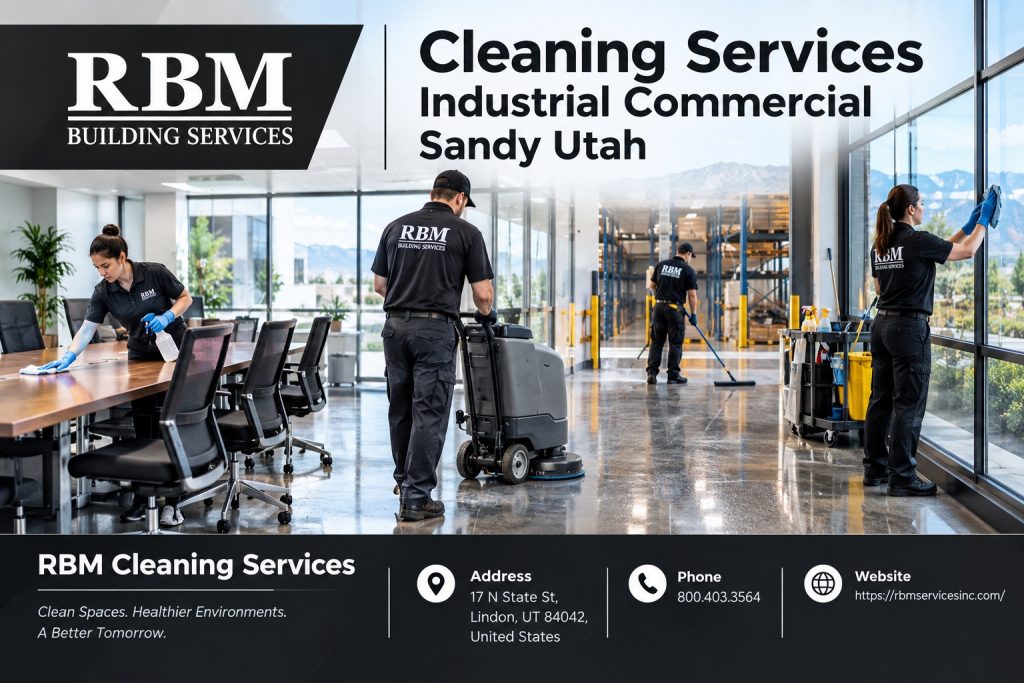
Industrial and commercial facilities require more than occasional sweeping and surface cleaning. From office buildings and retail spaces to warehouses, manufacturing facilities, and industrial properties, maintaining a clean environment is essential for supporting employee productivity, protecting equipment, improving the customer experience, and creating a professional impression.
For businesses searching for Cleaning Services Industrial Commercial Sandy Utah, choosing an experienced commercial cleaning provider can make a significant difference in daily operations. Sandy, Utah, is home to a wide range of businesses, professional offices, retail establishments, and commercial properties that depend on clean, organized, and well-maintained facilities.
Industrial and commercial environments have different cleaning requirements. An office may need regular floor care, restroom sanitation, and dust removal, while a warehouse or production facility may require specialized cleaning procedures, attention to high-traffic areas, and careful coordination around equipment and operational schedules.
RBM Cleaning Services, also referred to as RMB Building Services, is a company to contact when exploring professional commercial cleaning solutions for your facility. Establishing a consistent cleaning program can help businesses maintain their properties, address workplace hygiene, and provide a better environment for employees, customers, visitors, and contractors.
This comprehensive guide explains the importance of industrial and commercial cleaning, the services businesses may need, how to choose a cleaning provider, and why professional cleaning deserves a place in your facility management strategy.
Understanding Industrial and Commercial Cleaning Services in Sandy, Utah
Industrial and commercial cleaning are related services, but the requirements can vary significantly depending on the type of facility, its daily activities, and the level of cleanliness needed.
Commercial cleaning generally focuses on maintaining workplaces and customer-facing properties. Typical locations include office buildings, medical and professional offices, retail stores, common areas, and other business premises.
Industrial cleaning addresses the cleaning challenges associated with facilities such as warehouses, manufacturing buildings, distribution centers, and certain production environments. Depending on the facility, this may involve accumulated dust, residues, high-traffic floors, loading areas, and equipment-adjacent surfaces.
The exact cleaning methods depend on the building, materials, safety requirements, and activities taking place inside it.
For businesses in Sandy, professional cleaning services can help establish an organized maintenance routine that fits the property’s operational needs. Instead of relying on inconsistent cleaning or asking employees to manage tasks outside their primary responsibilities, businesses can develop a structured program with clearly defined expectations.
A well-planned cleaning program may include:
-
Routine cleaning of offices and shared workspaces.
-
Restroom cleaning and sanitation.
-
Cleaning and maintenance of hard floors.
-
Carpet and upholstery care.
-
Dust removal from accessible surfaces.
-
Breakroom and employee kitchen cleaning.
-
Trash collection and waste-area maintenance.
-
Cleaning of entrances, lobbies, and reception areas.
-
Warehouse and industrial floor cleaning, where offered and appropriate.
-
Scheduled deep cleaning and periodic maintenance.
Not every facility needs every service. The best approach is to assess the building, identify high-priority areas, and establish a schedule that supports cleanliness without unnecessarily interrupting business operations.
If you need related articles, see the following:
Cleaning Services Industrial Commercial Orem Utah
Cleaning Services Industrial Commercial West Jordan Utah
Cleaning Services Industrial Commercial West Valley City Utah
Why Professional Commercial Cleaning Matters for Sandy Businesses
Maintaining a clean workplace is more than a cosmetic concern. It contributes to how a business operates, how people experience the building, and how effectively the property can be maintained over time.
1. Creating a Positive First Impression
Customers, clients, suppliers, and prospective employees often form impressions of a business as soon as they enter its premises.
Dusty surfaces, dirty floors, overflowing waste bins, and poorly maintained restrooms can make a property appear neglected. In contrast, clean entrances, tidy reception areas, and well-maintained common spaces communicate attention to detail and professionalism.
For businesses in Sandy, where customers may visit offices, showrooms, retail spaces, and service facilities, cleanliness can support a positive customer experience.
Professional cleaning helps establish consistent standards across the areas people see and use most frequently.
2. Supporting Workplace Hygiene
Offices and commercial buildings contain many frequently touched surfaces, including door handles, shared desks, counters, switches, and breakroom equipment.
Routine cleaning and appropriate disinfection of selected high-touch surfaces can help reduce the buildup of dirt and support workplace hygiene. The correct products and procedures should be chosen for the surface, the type of contamination, and the intended outcome.
Restrooms, kitchens, and other shared spaces also require particular attention because they experience frequent use.
A professional cleaning plan establishes which areas need daily attention, which require periodic deep cleaning, and which need specialized procedures.
3. Improving Employee Comfort
Employees spend a substantial portion of their time inside workplaces. Clean floors, orderly common areas, maintained restrooms, and tidy breakrooms contribute to a more comfortable working environment.
Visible dust, persistent odors, and neglected shared spaces can create frustration and make the workplace feel less cared for.
A dependable cleaning routine helps businesses maintain an environment in which employees can focus on their responsibilities rather than dealing with avoidable cleanliness issues.
4. Helping Maintain Floors, Fixtures, and Building Materials
Dirt and grit can gradually wear down flooring, while spills and unsuitable cleaning chemicals may damage certain surfaces.
Regular removal of dust and debris, prompt attention to spills, and appropriate floor care can help preserve the appearance and service life of building materials.
Different surfaces require different methods. Tile, vinyl, polished concrete, carpet, and other flooring materials should be maintained according to their characteristics and the manufacturer’s recommendations.
A suitable maintenance schedule can help prevent minor cleaning issues from becoming more difficult or expensive to address.
5. Supporting Business Operations
A cluttered or poorly maintained facility can create unnecessary distractions. For example, dirty entrances may require frequent attention from employees, while poorly maintained shared spaces can disrupt normal workplace routines.
A coordinated cleaning program assigns responsibility for recurring tasks and establishes when those tasks should be completed.
Businesses can also schedule cleaning outside their busiest operating periods to minimize interference with employees, customers, deliveries, and production activities.
The result is a more predictable approach to facility upkeep.
Industrial Cleaning Services for Warehouses and Manufacturing Facilities
Industrial facilities often have cleaning challenges that go beyond routine office janitorial work. The type of work performed inside a building determines the cleaning methods, equipment, training, and safety precautions required.
For Sandy businesses operating warehouses, production areas, distribution facilities, or equipment-intensive workplaces, cleaning should be planned around the facility’s actual operating conditions.
Warehouse Floor Cleaning
Warehouse floors experience regular foot traffic, material handling, pallet movement, and deliveries. Dust, packaging debris, and tracked-in dirt can accumulate quickly.
A suitable cleaning program may include sweeping, machine scrubbing where appropriate, spill cleanup, and attention to entrances and loading zones. Floors should be cleaned with methods compatible with the surface and the facility’s safety requirements.
Keeping aisles and access routes free of cleaning equipment and debris is particularly important in active warehouse environments.
Manufacturing Facility Cleaning
Manufacturing buildings can contain different types of dirt and residues depending on the production process. Some facilities primarily need dust removal and general housekeeping, while others may require specialized procedures for oils, grease, or process-related contaminants.
Before cleaning begins, management should identify restricted areas, sensitive equipment, required personal protective equipment, and substances that must be handled by specially trained personnel.
Routine cleaning should never interfere with machine safeguards, electrical systems, or established production safety procedures.
Loading Docks and Receiving Areas
Loading docks are exposed to outdoor dirt, vehicle traffic, packaging debris, and frequent deliveries. Regular attention to these areas helps maintain a more organized working environment.
Cleaning schedules should account for delivery times, vehicle movements, pedestrian routes, and any special requirements for handling spills.
Dust and Debris Management
Dust accumulation can affect the appearance of a facility and, depending on the material involved, may create operational or safety concerns. Ordinary surface dust must be distinguished from potentially hazardous industrial dust.
Where combustible, toxic, or otherwise hazardous materials may be present, businesses should use an appropriate risk assessment and qualified cleaning methods. Standard janitorial equipment and ordinary cleaning procedures are not substitutes for specialized hazardous-material controls.
Commercial Janitorial Services for Offices and Business Properties
Industrial facilities are only one part of the commercial cleaning market. Offices, retail locations, professional buildings, and multi-tenant properties also benefit from reliable cleaning programs.
Office Cleaning
Office cleaning helps maintain a professional environment for employees and visitors. Depending on the agreed scope, routine service may include:
-
Dusting accessible desks and furniture surfaces.
-
Vacuuming carpets and cleaning hard floors.
-
Emptying waste and recycling bins.
-
Cleaning conference rooms and shared workspaces.
-
Wiping appropriate high-touch surfaces.
-
Maintaining entrances, lobbies, and reception areas.
-
Cleaning kitchenettes and employee breakrooms.
The cleaning schedule should reflect the number of occupants, traffic levels, and working hours. Some offices need service every evening, while smaller workplaces may require fewer visits.
Restroom Cleaning and Sanitation
Restrooms require consistent attention because they are used frequently and can quickly develop odors, visible soil, and hygiene concerns.
A restroom maintenance program may include cleaning and disinfecting suitable surfaces, washing sinks and fixtures, cleaning mirrors, maintaining floors, emptying waste bins, and checking dispensers.
Restocking soap, paper towels, and toilet paper may also be included if specified in the service agreement.
The frequency of cleaning should reflect restroom usage, the number of occupants, and the property’s expectations.
Breakroom and Kitchen Cleaning
Shared kitchens and breakrooms need regular care because food preparation, spills, and frequent use can create unsanitary conditions if cleaning is inconsistent.
Routine tasks may include wiping counters, cleaning sinks, removing trash, and maintaining floors and accessible appliance exteriors. Employees should also follow appropriate food-storage and housekeeping procedures.
Cleaning staff should understand which tasks are included and which responsibilities remain with employees, particularly when handling food, personal belongings, or equipment.
Retail and Customer-Facing Spaces
Retail shops, showrooms, reception areas, and customer service facilities benefit from clean entrances, attractive floors, dust-free displays, and well-maintained restrooms.
Because these properties may experience substantial customer traffic, cleaning may need to take place before opening, after closing, or at selected times during the day.
A consistent schedule helps maintain the appearance of the business without creating unnecessary disruption for customers or staff.
Specialized Cleaning and Building Maintenance Options
Beyond routine janitorial work, some facilities require periodic services to address areas that cannot be maintained through everyday cleaning alone.
RBM Building Services lists several specialized commercial cleaning and property maintenance options on its official website, including floor recoating, window washing, pressure washing, green cleaning, and broader building maintenance services.
The appropriate services depend on the facility, and businesses should confirm availability and scope when requesting a proposal.
Commercial Floor Care
Floor care can involve more than daily sweeping and mopping. Depending on the material and its condition, periodic maintenance may include deep scrubbing, polishing, stripping and recoating, or other appropriate restoration procedures.
Different surfaces require different products and techniques. Using unsuitable chemicals or excessive moisture can damage flooring, so the cleaning provider should understand the materials present in the building.
Well-planned floor maintenance can improve appearance and help preserve flooring over time.
Carpet Cleaning
Carpeted areas can accumulate dust, tracked-in soil, and stains. Regular vacuuming helps remove loose debris, while periodic professional cleaning may address deeper soil and persistent stains.
The appropriate cleaning method depends on the carpet fibers, backing, condition, and manufacturer’s care recommendations.
Scheduling carpet cleaning during low-occupancy periods can help reduce disruption and allow adequate drying time.
Window Washing
Clean windows improve the appearance of commercial properties and help maintain clear views and natural light.
Window cleaning requirements vary according to building height, access, glazing type, and environmental exposure. High windows and difficult-to-access exterior surfaces may require specialized equipment, trained personnel, and additional safety precautions.
Pressure Washing
Exterior concrete, selected building surfaces, and parking areas may accumulate dirt and grime. Pressure washing can help restore their appearance when the surface and conditions are suitable.
Cleaning professionals should select appropriate pressure levels and products to avoid damaging paint, masonry, sealants, or other materials. Drainage and wastewater handling must also be considered.
Green Cleaning
Some businesses prefer cleaning methods designed to reduce unnecessary chemical exposure and environmental impact.
Green cleaning may involve appropriate product selection, efficient equipment, microfiber systems, and procedures that minimize waste. The specific benefits depend on the products and methods used.
Businesses with sustainability goals should ask which products and practices are included and whether documentation is available to support any environmental claims.
Cleaning Services for Different Industries in Sandy, Utah
Each type of commercial property has different priorities. Understanding those differences helps businesses choose a cleaning program that matches their operations.
| Industry or facility | Common cleaning priorities |
|---|---|
| Corporate offices | Workspaces, floors, restrooms, breakrooms, meeting rooms |
| Warehouses | Floor debris, loading areas, aisles, employee facilities |
| Manufacturing facilities | General housekeeping, dust control, designated work areas |
| Retail stores | Entrances, display areas, floors, customer restrooms |
| Medical and professional offices | High-touch surfaces, restrooms, appropriate disinfection procedures |
| Educational facilities | Classrooms, shared surfaces, restrooms, common areas |
| Multi-tenant buildings | Lobbies, corridors, shared restrooms, entrances |
| Distribution centers | Traffic areas, receiving spaces, breakrooms, administrative offices |
Specialized facilities may have requirements that go beyond general commercial cleaning. Healthcare environments, for example, may require specific infection-control procedures, while industrial facilities may need special precautions for chemical residues or process-related dust.
Businesses should communicate these requirements before service begins to ensure the cleaning plan is appropriate for the facility.
How Often Should a Commercial or Industrial Facility Be Cleaned?
The right cleaning frequency depends on how the building is used, its occupancy, the type of work performed, and the cleanliness standards required.
Daily Cleaning
Daily service may be appropriate for busy offices, frequently used restrooms, customer-facing spaces, and facilities where waste and debris accumulate quickly.
Typical tasks may include emptying bins, cleaning restrooms, maintaining entrances, and cleaning frequently used surfaces.
Several Times Per Week
Some smaller offices and lower-traffic properties may be adequately maintained through scheduled cleaning several times each week, supplemented by employee housekeeping and prompt spill cleanup.
Weekly or Periodic Cleaning
Certain tasks, such as detailed dusting, selected window cleaning, or more intensive floor maintenance, may be scheduled weekly, monthly, quarterly, or at another interval appropriate to the facility.
Deep Cleaning and Special Projects
Deep cleaning may be useful after construction, renovation, special events, equipment changes, or periods of unusually heavy use. The timing depends on the type of work and the condition of the building.
For industrial operations, some cleaning tasks must occur at specific intervals or during planned shutdowns. Those requirements should be coordinated with facility management and applicable safety procedures.
A good cleaning plan separates routine duties from periodic projects so that essential daily tasks are not overlooked.
How to Choose the Right Industrial and Commercial Cleaning Company
Selecting a cleaning provider is an important facility management decision. The lowest-priced proposal may not provide the service level your building actually needs.
Before signing an agreement, consider the following factors.
Experience With Similar Facilities
Ask whether the company has experience with buildings of comparable size, occupancy, and operational complexity.
A provider that regularly cleans offices may not automatically be equipped for every industrial cleaning task. Similarly, facilities with sensitive equipment or specialized sanitation requirements need appropriate training and procedures.
A Clearly Defined Scope of Work
The proposal should specify which rooms, surfaces, and tasks are included. It should also explain service frequency and identify exclusions.
For example, a standard janitorial agreement may cover office floors and restrooms but exclude high-level industrial cleaning, hazardous-material removal, or specialized machinery cleaning.
Clarifying these details helps prevent misunderstandings.
Appropriate Training and Safety Procedures
Commercial cleaning staff may work around employees, customers, machinery, electrical equipment, and chemicals.
Ask about staff training, chemical handling, access control, and procedures for reporting hazards. Industrial projects may require additional training, personal protective equipment, or specialized contractors.
Scheduling and Communication
A cleaning provider should be able to discuss service times that fit your operating schedule. For some facilities, evening service is preferable; others may require daytime cleaning or planned work during shutdown periods.
Establish a contact process for reporting missed tasks, requesting additional work, and resolving service concerns.
Quality Control
Ask how the provider checks completed work and handles feedback. A practical quality-control system may include site inspections, task checklists, communication with facility managers, and documented follow-up.
Regular communication helps ensure that the service remains aligned with the building’s changing needs.
Insurance and Contract Terms
Confirm that the provider has appropriate insurance and that the agreement clearly describes responsibilities, pricing, payment terms, cancellation provisions, and any applicable warranties.
For industrial environments, verify that the provider’s insurance and qualifications are suitable for the work being proposed.
Why Businesses Should Call RMB Building Services
When searching for Cleaning Services Industrial Commercial Sandy Utah, businesses need a provider that can help them develop a practical, consistent cleaning program.
The company identified in your request as RMB Building Services uses the name RBM Building Services in its official company materials. Its website describes a commercial cleaning and building maintenance business founded in 1974, with full-service janitorial cleaning and additional facility services.
Here are several reasons to contact the company and discuss your requirements.
1. A Broad Range of Commercial Cleaning Services
Managing multiple service providers can increase administrative work. A provider offering several related cleaning and maintenance services may help simplify coordination.
RBM lists full-service janitorial cleaning, disinfection, floor recoating, window washing, pressure washing, and green cleaning among its services.
Businesses can ask which services are suitable for their property and whether the company can accommodate the specific requirements of their industrial or commercial facility.
2. Cleaning Plans Tailored to Your Property
An office building, warehouse, retail location, and manufacturing facility have different cleaning needs.
Before requesting a proposal, identify your building’s size, operating hours, busiest areas, flooring materials, restroom requirements, and any specialized cleaning concerns.
Discussing these details with RBM can help establish a service scope that reflects your actual needs rather than paying for an unsuitable one-size-fits-all program.
3. Support for Ongoing Facility Maintenance
Cleaning is part of a broader property maintenance strategy. Floors, windows, entrances, and shared areas all need attention over time.
Because RBM lists additional building maintenance services alongside its janitorial offerings, it may be a useful contact for businesses that want to explore related facility needs through one provider. Confirm which services are available for your particular location and project.
4. Options for Environmentally Conscious Cleaning
Businesses seeking to reduce unnecessary chemical exposure or support sustainability initiatives can ask about RBM’s listed green cleaning services.
The appropriate approach depends on the facility’s requirements, the cleaning products used, and the effectiveness of the selected methods. Ask for details about available products, procedures, and any relevant documentation.
5. A Convenient Starting Point for Sandy Businesses
RBM’s official Salt Lake County service-area information specifically lists Sandy among the communities it serves.
This makes the company a relevant option for businesses seeking commercial cleaning support in the Sandy area.
When you contact the company, explain whether you need recurring janitorial services, periodic floor care, specialized cleaning, or a broader maintenance plan. Ask about availability, pricing, scheduling, and the services it can provide at your property.
How to Prepare for a Commercial Cleaning Consultation
Before contacting a cleaning company, gathering a few details can make the consultation more productive.
-
Estimate your building size. Provide the approximate square footage and the number of floors.
-
Describe the facility. Explain whether it is an office, warehouse, retail space, manufacturing building, or mixed-use property.
-
Identify your priorities. List the areas that require the most frequent attention.
-
Explain your operating schedule. Note busy periods, deliveries, production hours, and times when cleaning would cause disruption.
-
Identify specialized requirements. Mention sensitive equipment, restricted areas, unusual residues, or specific sanitation expectations.
-
Establish a budget. Determine your preferred service frequency and whether you need a recurring contract or a one-time project.
-
Request a written proposal. Review the task list, schedule, pricing, exclusions, and quality-control arrangements before committing.
This preparation helps the cleaning provider understand your facility and recommend an appropriate scope of work.
Frequently Asked Questions About Industrial and Commercial Cleaning in Sandy, Utah
What is the difference between commercial and industrial cleaning?
Commercial cleaning typically focuses on offices, retail stores, restrooms, and shared building spaces. Industrial cleaning addresses the additional requirements of facilities such as warehouses and manufacturing buildings, where equipment, production residues, and operational safety may affect cleaning procedures.
Can a cleaning company work outside regular business hours?
Many commercial cleaning programs can be scheduled outside normal operating hours, depending on the provider’s availability and the property’s requirements. Discuss evening, overnight, or other scheduling options before finalizing an agreement.
How much do industrial and commercial cleaning services cost in Sandy?
Pricing depends on building size, cleaning frequency, labor requirements, flooring, specialized equipment, and the complexity of the work. A written estimate based on an assessment of your facility is the best way to understand the likely cost.
Does every industrial facility require specialized cleaning?
No. Some facilities need routine janitorial and housekeeping services, while others require specialized equipment, training, or procedures. The cleaning plan should reflect the actual materials, activities, and hazards present in the building.
Does RBM Building Services serve Sandy, Utah?
Yes. Sandy is included in the company’s published Salt Lake County service area. Contact RBM directly to confirm current availability and the services appropriate for your facility.
Can commercial cleaning help protect flooring?
Regular cleaning removes dirt and grit that can contribute to surface wear. Appropriate periodic maintenance may also help preserve the appearance of certain floor types. The right methods depend on the flooring material and manufacturer recommendations.
Contact RBM Cleaning Services for Industrial and Commercial Cleaning in Sandy, Utah
Maintaining a clean industrial or commercial property requires a consistent plan, suitable cleaning methods, and clear communication between the cleaning provider and facility management.
From office janitorial work and restroom sanitation to commercial floor care, window washing, and selected industrial cleaning tasks, a well-organized program can help businesses maintain a professional environment while managing their properties more effectively.
If you are looking for Cleaning Services Industrial Commercial Sandy Utah, consider contacting RBM Cleaning Services to discuss your building, cleaning priorities, and service expectations.
RBM Cleaning Services
Also known as RBM Building Services
Address: 17 N State St, Lindon, UT 84042, United States
Phone: 800.403.3564
Website: https://rbmservicesinc.com/
Visit RBM Building Services Website
A clean facility supports your business’s professional image, creates a more welcoming environment for employees and visitors, and helps you maintain your property over time. Start by identifying your facility’s most important cleaning needs and requesting a proposal that fits your operations.
With a clear scope of work and a dependable cleaning schedule, your Sandy business can take a more organized approach to maintaining a cleaner, more professional workplace.

Comments are closed.